Wednesday, 17 April 2013

And we’re racing! (Hopefully)

I saw a physio about my swimmers shoulder and it turns out with a bit of luck and a lot of rehab work it should be ok.  It looks like it’s not directly my rotator cuff but my bicep that is sore. It’s connected/caused by the rotator cuff but not any sort of impingement as I was worried about. It’s good that I picked it up early. The physio thought, and I agree, it’s probably caused by lack of rotation when swimming and my poor flexibility, especially of my spine. So it’s a new set of strengthening, stretching and flexibility exercises and importantly to continue with the bilateral breathing as per my last blog.

Even before I saw the physio another old issue reappeared in the form of tendonitis of my right Achilles. I did my final long run before the London marathon last Saturday (6th April) which was fine but then on the Monday I did an easy interval session with Cardiff Tri. I was going easy but half way through I started to feel that annoying twinge at the back of my heel. I cut short the session and did a slow jog followed by some intense icing. I did some more light running again this Monday and it was still tight. I’m hoping it’s just a reaction to doing some sprints so soon after my long run. Like the swimmers shoulder, I started getting Achilles tendonitis just before the Ironman 5 years ago. I’ve had orthotics fitted for my “heavy over pronation”. I’ve constantly been doing exercises (heel drops), stretching and then icing after runs for the last few years which I thought had solved (or at least managed) the problem. All I can do now is rest, stretch and ice often until the marathon on Sunday.
All this happened in the week that I have just about finished entering all the races I’m planning to do for this year. It got me worried that any flare up of these issues or other new ones and I can’t race, then I am seriously out of pocket with all these entry fees. Waiting until closer to the event was not an option as this year these events are selling out fast. I think this is partly due to the UK having the AG world championships here in September but mostly the effect of the Olympics on people. It’s getting people active. The organiser of our local Try-a-Tri said that the event sold out in 38 minutes when it went live on Easter Monday evening.  Just about every event I’ve entered is now sold out or nearly full.  I just hope that I can stay healthy and compete as they just about all have a “no refunds” policy. The normal stuff..... “most costs are incurred before the event so unfortunately we cannot offer refunds etc. etc.”  I can’t argue with that, it’s just it seems like a game of roulette committing (and paying) for things so far in advance when there is a good possibility you’re not going to make some starts. You can see this normally from all those DNS in the results from previous year’s races.


Including the London Marathon I’m up to 16 Triathlon and running events entered for 2013. That’s at least 10 more than I would normally do in an average year. I’ve even entered two Triathlons on consecutive days (Sprint & OD ITU qualifiers). In the past I’ve struggled with two Tri’s in consecutive weekends, so that’s going to be an interesting weekend!  The list includes five ITU Tri qualifiers, one ETU qualifier, and one ITU aquathlon qualifier. In amongst all these are two British Champs, two Welsh Champs and three Welsh Grand Prix races, including an off road tri, which I think I’m looking forward to the most. Then there is of course is the ETU Age Group Champs in Turkey and, if I ever qualify, the ITU Champs in London.
That must be over £800 in entry fees I’ve already spent. Wow – just did a search on my accounts software and came up with £798.35. That is just in, probably non-refundable, entries. Let's not think of all the other expenses.
Got to keep fit and healthy now!


Monday, 8 April 2013

Bilateral Breathing


I did bilateral... and I liked it!
The feel of symmetrical magic
I did bilateral just to try it
I hope my coach don’t mind it
If felt so wrong
It felt so right
Don’t mean I can swim tonight
I did bilateral and I like it
I liked it!


With apologies to Katy Perry!

Unfortunately I’ve developed “Swimmers Shoulder”. It’s an irritating pain in my right shoulder when I bring my arm over in the recovery position when I’m swimming frontcrawl. As a lifelong swimmer it’s an occupational hazard. I’ve had it before about 6 weeks before my Ironman back in 2008 and was obviously caused then, like now, by a fairly large increase in front crawl swimming. I got through it last time by cutting back a bit on distance which wasn’t a problem as I was close to the event, some quite intense physiotherapy and then some strengthening exercises. It went away with rest after the Ironman. This time I’m going to have to try and manage it all the way through to September whilst trying to maintain some reasonable weekly swim distances.
So I’ve got a physiotherapist consultation booked this week and I’m back to doing all my old strengthening exercises with various flexi bands. I’m also resigned to easing off the frontcrawl for a while. I guess Swimmers Shoulder has not really been too much of an issue for me in the past because, as I’ve previously mentioned, my first and best stroke is breastroke so little chance of the repetitive over arm movement that causes it. However, you really should swim frontcrawl in triathlons if you want to be any good so I’ve been concentrating on this again over the winter training and hence this situation. Swimmers Shoulder revolves around Rotator Cuff issues in the shoulder. When I suffered it before, the physio explained to me it was due to repetitive strain involving the shoulder joint and the associated soft tissues. As you get older you can manage to keep your muscle size and strength up by exercise and a good diet but there’s not a lot you can do to maintain joints and soft tissues. Pah this getting older!  In this case all you can do is to try and strengthen all the associated muscles around the Rotator Cuff that you don’t normally strengthen. This is where all the various exercises come in. As my irritation is on the recovery phase of the arm cycle, rather than the pull through, it’s possible I might be having internal impingement which is a bit of a worry. I know a couple of swimmers who have had this and it just got slowly worse for them over time. Ending in operations, a lengthy rehabilitation and, to be honest, resulting in not being as fast swimmers as they used to be. 

Having an unsymmetrical stroke almost certainly is a big factor in developing swimmers shoulder. I breathe to the same left side but I have a reasonably symmetrical stroke. Better than most who breathe to only to one side. It’s obviously not symmetrical enough! 


Here's a video Terry, my Cardiff Masters swimming coach, took of my frontcrawl a few months ago before the pain.

When I was little I did swim bilaterally (for a number of years actually). However when I started to specialise in breastroke and I only got to do frontcrawl in relays I just drifted to breathing on one side only. Then later in masters swimming it was just too much effort (and no need?). Knowing what I knew, even during my last encounter with this pain, I went to breathing every fourth stoke on the left side, rather than bilateral, because I didn't want to do it.

But, if I’m ever going to keep going through this summer I’m going to have to make an effort to try and recover the situation. I’ve now done a couple of swim sessions and whilst the first one was difficult, I managed to do the whole of the second session breathing bilaterally. And at the end, I even liked it!  You really could feel the symmetry.  Another benefit of bilateral is that you can watch your recovery stoke on both sides. Is your elbow in the right place?  Is your hand entry straight?
So that is the plan. Easy off for a bit, get physio, do strengthening and flexibility exercises and always swim bilaterally in training. But come any race I’m sure I’m going to be back to one sided race breathing. After all these years it’s still going to be faster for me come race time.

Tuesday, 26 March 2013

Thanks – Bike Shed Wales!


At the end of 2012 I was resigned to continuing my triathlons on my 8 year old entry level road bike. Upgraded with some reasonable wheels but still pretty basic and I guess, slow. I wasn’t prepared to upgrade to a decent Tri bike as I couldn’t justify that cost. I also didn’t see the point of getting a new, but cheaper bike. However all that changed. The bike got nicked. That, combined with an unexpected windfall meant that I had the perfect opportunity to get that good bike. I have to say I’m not really into bikes, bike maintenance and upkeep (or cleaning actually). Whether it’s the mountain bike or tri bike I just tend to take it to a local bike shop for a good service at the start of the season and that’s about it. So I had no pre conceptions of what bike I wanted or, in fact, what was out there. I scoured the internet for a tri specific suitable bike. The first thing I realised was that as I am over 6 foot that I needed an XL frame, and that most manufactures don’t make standard XL tri bikes so I was a bit limited for choice unless I wanted to put together my own bike (no I didn’t).

Then I went to the Trek site and found the perfect bike for me. The Trek Speed Concept 7.8, (XL frame). It did want I wanted, in my price range and..... it looked fantastic!  Right, that was it. How could I get hold of one before Xmas. There was one issue though.  The wheels that came with the package were Bontrager clinchers. I’d already realised from last year’s upgrade of wheels how important (and faster) top quality wheels are, so I’d decided I would upgrade to tubs. Bontrager Aeolus 9 to be exact. I didn’t think that would be a problem as I would be spending quite a bit more on the whole package.  I couldn’t do it directly through the Trek website but there were a few dealers listed in Cardiff so I went visiting. First stop, the big national chain. Not at a chance. They would sell me the Concept 7.8 package with clinchers AND the tubs extra, but not exchange them. This is not what I wanted to hear. I then tried another dealer. I have to say they didn’t seem to be interested in selling me anything let alone the change of tyres!  Finally, without high expectations I popped into The Bike Shed Wales on Cathedral Road in Pontcanna. Met JP there and explained what I wanted (I had all the printouts from the internet of the bike & wheels). He went and got John, one of the owners and.... not a problem. They would do the wheel exchange and substitute the tubs for the clinchers at the list price. Great!  I duly paid a deposit and about a week later....

 
Here is JP with the Trek bike with Bontrager tubs

I think there was a bit of a campaign recently about supporting your local bike shop. I for one now fully believe in that. I happen to mention to JP and John the reason for the new bike (the quest for AG Euro & World’s triathlon qualification) and they offered to support me in a number of ways. So The Bike Shed Wales www.bikeshedwales.com became one of my sponsors!
 
 
Bike Shed Wales Colours (Not seen daylight yet due to this stupid winter weather)
 
So I’m recommending The Bike Shop Wales for all your cycling needs. But, as it turns out, it’s not just me. Here is a screen dump photo of from a facebook page of my Tri club. They are talking about fixies. Pete Beaumont is a club coach, top triathlete and knows a bit about bikes so this is high recommendation. Pete allowed me to post his comments. And yes, for the observant - I do get up at 5am!

Friday, 22 March 2013

Three Month Review


Approaching Easter and once again the weather is absolute rubbish. Heavy rain and winds here in Cardiff but snowing a bit higher up on the mountains. This cold, wet weather is now forecast to last until mid April. I seem to remember no Indian summer for us last autumn and it getting cold last year already in October. So to my mind that’s about six months of winter! How does that work?  Therefore, for everyone, training outside has been challenging to say the least. I suppose I’ve been lucky in that through work I’ve had a few weeks away in warmer climes (Australia, South Africa and Morocco) and probably got a bit more Vitamin D than most. However, as anyone who travels regularly will know, it’s very difficult to do quality training whilst travelling.


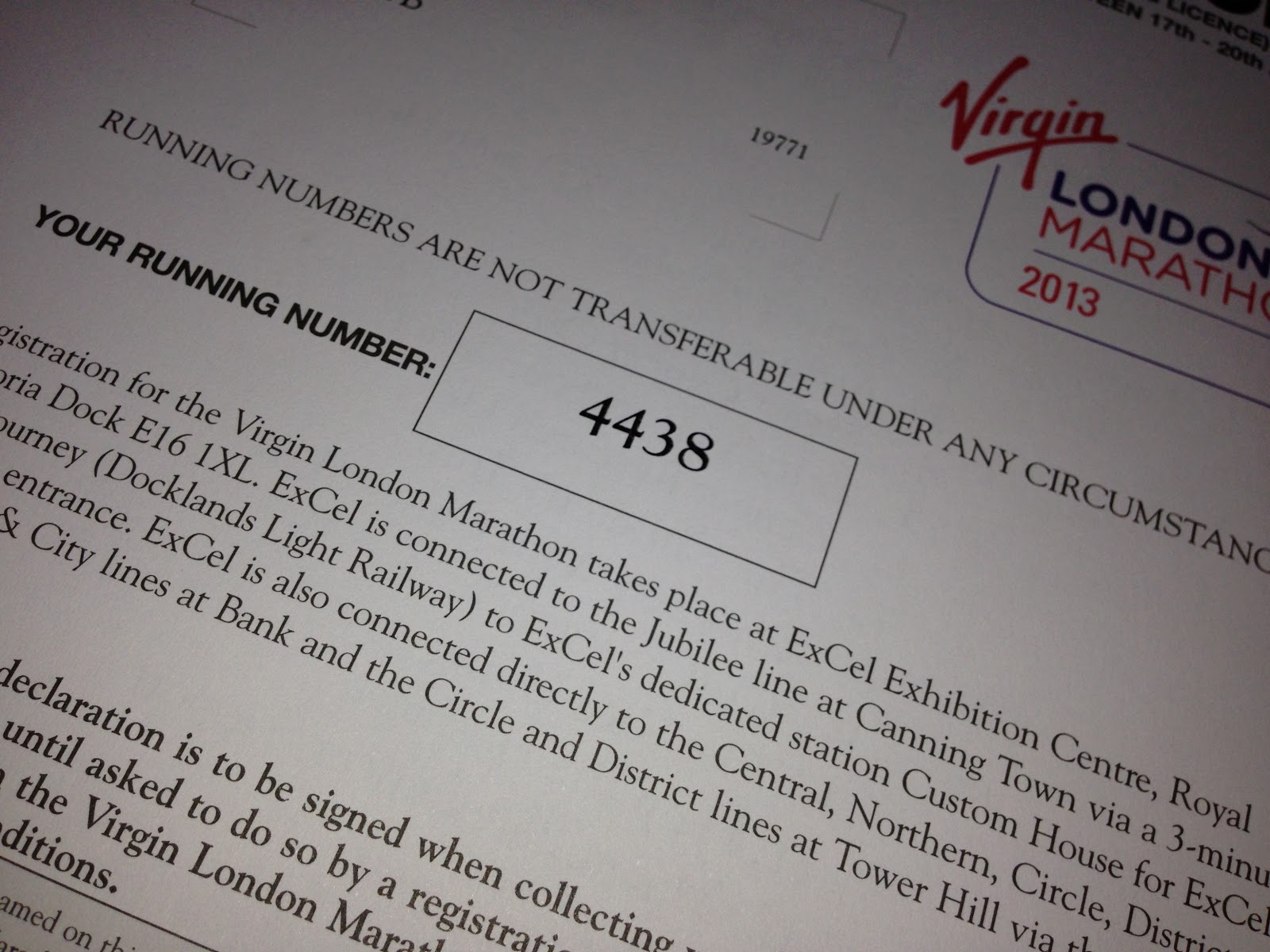
I got my registration documents and race number this week for the London Marathon, 21st April. It’s coming far too quickly for me to do it justice. Then again it’s not far enough before the Euro AG Triathlon champs for me to recover. But I’m glad I got in through the ballot. I see that the ballot closed at 125,000 entries and I guess there are no more than 25,000 places for ballot entry so those are quite long odds. London was my first and only marathon (outside of Ironman) which I did ten years ago. This is my third ballot application since then so that’s not too bad. Thinking back to that first marathon, I was so unprepared. I remember I bought a couple of pairs of generic running shoes in the States at a flea market. No doubt they were fakes as I got both for $20. It was only a few years later, and knackered legs, that I found out I was a very heavy over pronator and if I’d kept with that type of shoe I probably wouldn’t be able to walk now, let alone run. These days, with the help of the internet, I’m fully kitted up with the right gear and I know what to do. It’s just a matter of doing it!  For my very long pre marathon run I chose this weekend to enter the San Dominico 20 mile race in Merthyr Tydfil. The current temperature prediction for Merthyr for Sunday is -2C to zero. It will probably be either raining or snowing. Oh what fun!

So to review, like most I guess, I’ve done most of my training indoors in the last three months. In fact, looking at my logs, the last time I was out on the road on a TT bike in anger was at the London Tri back in September. I have tested both my new TREK Triathlon bike and my second hand road training bike out on the flats but not really training. It’s all been on the mountain bike, spin classes and on the turbo trainer. Run and swim training has been ok, but as always, subject to managing little niggles. In the three months I’ve hit both 5km and half marathon PB’s which I’m really happy with. However my swim times are rubbish. I entered a few events at the recent Welsh Masters Swim Championships but bailed out after only two of the events. Although my 400m time was 10 secs better than last year it wasn’t what I was hoping for with the training I’ve been doing (I also wanted to watch the rugby which might have had something to do with it).

I suppose the biggest fear of veteran age groupers is being hampered or fully curtailed by those injuries and conditions that you are more susceptible to getting, and take much longer to recover from, as you get older. I consider myself fit for my age (as you get older you always have to say that –“ I did well in that race for my age”) but the older you get the harder it is to get over any injury. A while back, before I was 50, I had a discussion in a pub with some guys who had already turned 50 and more. They swore that the “tipping point” was 50 years of age.  This is when things really start to go downhill. I didn’t believe them at the time. Now I do.

As an example, I got a new heart rate monitor for Xmas. So the first time I used it after Xmas I got this (after a long run).
 

A very nice rash and graze from the hrm strap.  OK, now I cover the offending bits with a plaster and smother it in Vaseline, but three months later the scar is still very prominent and does not want to go away. 15 - 20 years ago it would have disappeared in a couple of weeks. 25 years or more ago, it would have been gone in a week. That’s the problem as you get older. You just hope you don’t come off your bike as any cuts or grazes will mark you more than an Ironman tattoo. One of the biggest problems for older athletes is that whilst you can generate large, strong muscles with training and the right diet, protein shakes, amino acids etc. there’s not a lot you can do with the supporting soft tissue (tendon’s, ligaments etc.). Which, no matter what you do, basically shrink and get hard with age and struggle to support the muscles you’re trying to develop. Hence my two big problems of swimmers shoulder (rotator cuff injury) and Achilles tendonitis. I know all ages can get these problems it’s just that it’s much harder to manage when you’re older. It requires lots of work on the supporting muscles (around those you are actually using) with strength exercises, physio, and particularly in my case with my Achilles, ice the tendon after every run to get the blood flowing through.

I’ve had a few days off training this week as I’ve had pipes through my nose into my gullet measuring pressure and pH (for 24hrs). Not easy to train like that, especially with a monitor strapped to your side and a cold (but snot’s the issue!). It’s another age related thing, but not directly to exercise and fitness, just age. There’s so many other little things I could go on about (don’t get me started on bone density, mineral deficiency and stress fractures) it becomes boring but worse, very negative. I think you just have to keep going and see what happens. Two things I hope I never get problems with are shingles and inner ear (balance) problems. These are two conditions prevalent in the over 50’s and I know quite a few friends and athletes being knocked for six and out of things for months/years by these. For shingles, it’s estimated that 1 in 4 over 50 year olds, who have had chicken pox will get it to some degree. I don’t think (haha) I’m a hypochondriac, just pro-active in my heath, but when I was offered a vaccine against shingles last year (for money) I jumped at it.
My next goal?  To be able to walk on Monday after the 20 miler.

Wednesday, 6 March 2013

"A goal without a plan is just a wish"


“A goal without a plan is just a wish.”   ― Antoine de Saint-Exupéry

I’ve come to realise that if I’m going to be successful in my goal(s) then 90% of getting there is in the planning.  Probably more accurate would be juggling priorities. I still have the tri champs’, swim champs’ and London marathon goals but the logistics around each are difficult enough let alone doing any sort of training for them.
I’m just about set for the European AG Tri champs in Turkey in June. Luckily the family decided to make it our holiday. So we’ve rented a very nice, but low cost villa on a beach, through AirB&B near Alanya for a couple of weeks either side of the competition. We also got cheap flights with Easyjet, I guess because we are arriving a bit earlier and leaving a bit later than most. Even the in-Laws are coming from Germany. They are going to do their normal trick of cycling around the country for a few weeks before we get there. I’ve even paid the event registration to British Triathlon.

Doing all this made me think more of the planning for the AG World Champs in Hyde Park in September. This is particularly hard as I have no idea if I’ll even qualify. It looks like every aspiring age grouper wants to qualify, seeing how the qualifying races sold out so quickly, so it’s going to be tough. And then the main qualifier for the Olympic distance, the Liverpool Tri, hasn’t even opened for entries yet. Anyway, I happened to see that the official travel agents (Nirvana) were already selling accommodation packages for the event in London. Apart from the “Athletes’ Village” (read student accommodation at Imperial College) they had a few apartments actually on Hyde Park. They looked great (for the family) and quite reasonably priced so I swallowed hard, jumped in and booked them for the 3 nights Thurs thru Sunday.

The apartment looks ok on the website??
 
So we are going whether I qualify or not!  Sprint or Olympic, who knows?  If I don’t qualify it’s probably a waste of money and a bit of an inconvenience but then I saw the organisers had arranged a ballot for an “open to all” AG race on the Saturday (nothing to do with the AG world champs’). At first I wasn’t interested until I saw that they were offering a full refund (less £15 admin of course) if a successful ballotter then did qualify for the world champs. So as “insurance” I’ve now also entered the ballot for the open sprint race with the hope that, if successful, I won’t have to do it!  Planning Planning Planning!
In the pool, on the road and in the gym things seem to be going ok. I’ve had a few days off for the normal flu that everybody seemed to get but it wasn’t so bad for me. I’m about half way through my base training phase.  I did a half marathon at the weekend and surprised myself by taking just under 7 minutes off my PB.  I was happy with that. This weekend is a change of sport and another focus – the Welsh Masters long course swimming championships in Swansea. And I’m going long! 400’s, 800’s and, for some reason, the 400 Individual Medley. Oh well - cross training at its best.

Friday, 8 February 2013

And the Answer is....

In my case the answer is “twice the meaning of life”  = 2 x 42 (The Answer to the Ultimate Question of Life, The Universe, and Everything; Hitchhiker’s Guide..) = 84  
84 kilograms to be exact.

So the metrics question must be:  What is my ideal racing weight?
I’ve thought long and hard as to how to measure myself and my progress through my training to get to race day. I’ve read a lot of good advice on the internet and even bought a few books on the subject. There are so many metrics you could measure and use. There’s the simple one of heart rate variation. There are the time based metrics – swim, cycle or run over set distances/races to track improvement (or not). Then there is the more advanced stuff like VO2 Max and lactate threshold tests.

In the end I decided, for me, for something straight forward; at my age, with my lifestyle simply achieving an optimum weight for my height and build should mean that everything else will fit into place. I read Matt Fitzgerald’s book – Racing Weight: How to Get Lean for Peak Performance - and whilst I don’t necessary like his nutritional methods to get there I concurred that the objective is right, and especially for me.  So I calculated what my racing weight should be and I came to the answer 84kgs. That sounded about right as I had found a copy of an old medical I had done for some employment 33 years ago  and lo and behold I was 84kgs (probably with my clothes on) and I don’t remember carrying any excess baggage in those days.

I think if I do hit 84kgs then I must be having the right nutrition and doing the right amount, or at least enough, training to be able to delivery my optimum level of performance.
It sounds very easy. Eat healthily, keep up the training and there you are. But it’s not so simple. First off exactly this time last year I weighed in at 101kgs.  Although I’m 6’ 1” tall (186cm to be precise) that was quite "heavy" for me. There were reasons though. Young family, work – business lunches and drinks, international business travel (and even more eating out and drinking!) all contributed. However the 101kgs was probably mostly down to a stress fracture of my foot incurred the previous year which obviously impinged on any exercise I could do and especially the fat burning kind. With some dedication (even if I say so myself) I’m now down to 89kgs.  However, as anyone who has tried to get to that target weight will tell you, those last few kgs are the hardest. The calories in, verses the calories out must be very finely balanced. To lose weight calories out should obviously be higher than calories in. But to maintain a high level intensity in your training you need that energy from the calories. If you do that high intensity training then your body screams for “re-fuelling”.
 It’s very hard to say no to food at that time when your body is demanding it and if you do say no, is it going to have a negative effect on your recovery? I’m finding that I can just about eat as planned for breakfast, lunch and dinner but later at night (ok, later in the evening, I need a good nights sleep!) I get huge cravings for something sugary. It doesn’t have to be much, a few chunks of chocolate, but I’m not satisfied until I get it. I don’t see this as particularly bad, more like a reward. Similarly, having the odd beer or glass of wine I don’t think is such a bad thing. I’m currently trying to follow a low carb diet with lots of salads, fruit and veg. Hopefully if I hit, or get near, my racing weight I can have a few more carbs as race time approaches.

I do actually also use a HRM to try and train in the right zones and I’m even contemplating getting a VO2 Max test done. I had one done back in 1992. I would love to see how I would compare today. I’m probably a bit fitter than then but I’m sure age has taken a big toll. 
Percent
Heart Range
Run Vo2
 
bpm
(ml/kg/min)
 
 
100
175 - 185
63.2
90
160 - 175
49
80
150 - 160
33
75
135 - 150
29
70
125 - 135
26
60
110 - 125


Age Very Poor Poor Fair Good Excellent Superior
13-19 <35.0 35.0 - 38.3 38.4 - 45.1 45.2 - 50.9 51.0 - 55.9 >55.9
20-29 <33.0 33.0 - 36.4 36.5 - 42.4 42.5 - 46.4 46.5 - 52.4 >52.4
30-39 <31.5 31.5 - 35.4 35.5 - 40.9 41.0 - 44.9 45.0 - 49.4 >49.4
40-49 <30.2 30.2 - 33.5 33.6 - 38.9 39.0 - 43.7 43.8 - 48.0 >48.0
50-59 <26.1 26.1 - 30.9 31.0 - 35.7 35.8 - 40.9 41.0 - 45.3 >45.3
60+ <20.5 20.5 - 26.0 26.1 - 32.2 32.3 - 36.4 36.5 - 44.2 >44.2

Friday, 1 February 2013

Numbers! Numbers!


Seeing it’s rugby international time in Wales again, so to quote Jonathan Davies -Numbers! Numbers!
6188 to be precise.  6188 seconds is apparently how long it takes me to run a half marathon. This was my chip time at the Marrakech half marathon on Sunday. It was also my chip time for the Cardiff half marathon back in October 2012. Now that is consistency. I keep a spreadsheet of results. I’d already cut & pasted the previous half marathon and changed the name and date details before the half marathon. But when I came to fill it out with the times and pace (on the plane back as it happens), it was already correct!  For those not wanting to do the maths, that’s 1hr 43mins and 8secs.
Rather sweaty but looking resplendent in my Cardiff Tri vest
 
At first I wasn’t particularly happy with the time as I thought I should have run faster but on reflection, and a few beers later, it wasn’t so bad.  Although a flat course it’s not the easiest run with changing surfaces, bends, dogs and sometimes motorbikes getting in the way. Also, although it was a bit misty at the start it soon burnt off and it must have been about 25C by the finish. That was quite warm for me but I guess it's good preparation.

It was the first race I’d run with my Garmin +HRM +Footpad.  I’m not really a gadget man but looking at the data later did indicate some good things.  The bad things were my complete inability to pace myself.  The first 2km I did at sub 4.15/km pace but the last 2km it was plus 5.30/km pace, with large fluctuations in between, depending on how I felt at the time. Hopefully, with the Garmin, this is something I can do a bit better in the future. I would love to do a negative split. The best thing was my average cadence of 90 spm over the whole distance.  And I didn’t even concentrate on it during the race. This time last year I was an over-pronating, low cadence heel striker. I can definitely now say that I’m a normal (with the help of orthotics) higher cadence mid foot striker. This is what I’ve been practising to be for the last few months.  After the race the only bit of tightness I felt was in my shoulders and I think this is because I was using my arms much more during the race. Higher back elbows and more pumping of the arms. Again this is something I’ve been working on. My average HR over the distance was 156 bpm.  I’m not really sure what I should read into this. I previously had a measured max HR of 188. So this would put the whole run into my level 4, anaerobic threshold or hard, HR range.  Which I guess is not too bad. Also this was the first half marathon I've done that my legs didn't ache for days afterwards.
Data entry on the flight home with my No. 1 supporter
 
So with all these gadgets to generate so much information and then calculate all the “metrics” that you working on through your training stages and taper to the race, what is the best criteria to manage?  Well, taking in my age, lifestyle and fitness, I’ve decided to base everything on just one metric and I’ll try and justify it in a later blog. 

However the answer is - “twice the meaning of life”    Can you tell what it is yet?